Videographer: Mary Holly Visitor
Story: Abraham Matches
Abraham sits in the Heritage Language Program office, beside a desk. On the yellow wall behind him we see part of a colorful syllabics chart that explains the sound of each syllabic used in writing East Cree language. On the desk to his left is a small fan and a paper with a bright rainbow and syllabic writing. Abraham’s grey hair is combed back. He has a neatly trimmed beard and is wearing a fall camo shirt printed with leaves and branches in shades of beige, grey green, and rust.
He looks up at the camera, says okay, and begins to speak in Cree. He says: I was asked to talk about activities done during the fall season, that is after the young birds and animals had grown and the berries were ripe.
In the past when the people still went to live out on the land, they would gather what they needed before leaving the settlement to go out to their traplines [hunting territories]. Their mode of travel would be to paddle their canoes upriver, as this was before there were roads They would be on their traplines when winter came and set their beaver traps.
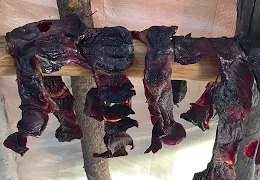
Before they left, usually during the month of August, they would go out and set their fish nets to harvest fish until they left the settlement. They would smoke the fish and dry them to make fish powder for pemmican, a food that lasts a long time. They would also harvest food which was light in weight which they would take with them on their way inland.
This is what the people used to do: gather food they needed from the land to sustain them on the journey to their traplines. This also included necessary supplies from the store such as flour, sugar, tea and other staples. Before they got to where they would spend the winter, they would [stop along the way to] build a cache and store some of these food supplies for later use or in case they ran out of supplies for time they would be out on the land. Then, they would travel on to where they would spend the winter, looking for a good location where the necessities for the winter would not be far from their camp. This location would not be far from sources of firewood, spruce boughs, and moss that would be needed for the winter lodge. These things would help keep the camp warm and comfortable during the cold winter months.
Many things have changed during the fall season concerning hunting for food. When people have a toboggan, they can carry all the items they need for the trapping season, such as traps, snowshoes. These necessary items can be taken to the winter location ahead of time. Today the people have cabins instead of the winter lodges they used to build for the winter.
When the rivers and lakes were frozen hard, people would be free to travel anywhere and start their trapping for fur activities and harvesting food. Before the rivers and lakes were safe enough to travel on foot, the people first made camps close to an area where they thought they could harvest food until they could reach the winter camp location. This is where the family would spend the fall season until it got too cold to gather wood to make toboggans, snow shovels and snowshoes.
When the hunter came home in the evening, he would start making these implements he would need for the winter. I remember the times my father would do this. He would be carving these tools after he came home in the evening from hunting for food. He would make the snowshoes and snow shovel. He would also make snowshoes for us and small toboggans for us children to go sliding when winter came. It was a happy time.
One of the foods that people would harvest in the fall would be the porcupine if it happened to be around. This was something different to eat besides the fish which had been preserved. The other thing would be big game like the moose and bear. Before the cold weather set in, the people would preserve the food by smoking and drying the meat from these animals. In the winter, the meat would be frozen and kept for different feasts and ceremonies. For daily eating it was mostly rabbits and spruce grouse in the fall.
Abraham takes a deep breath and says, slowly: Okay, this is all I wanted to say about that.